There is no possibility of any machine where its parts operate in contact and relative motion without lubrication. Otherwise the service life would be negligible. With the internal combustion engines used in automobiles the theory is exactly the same, and there are a few more.
The fact is, the formation of a thin and uniform lubricant film between the cylinder walls and the engine pistons is the main function of the lubricating oil. This film prevents metal-metal contact of the parts, which would raise their temperature to compromising levels, and consequently the seizure phenomenon. This is why this component is essential for the proper functioning of the engine.
In this article we will cover the types, classification and characteristics of the lubricating oils used in car engines, whether they are diesel or Otto cycle.
Types
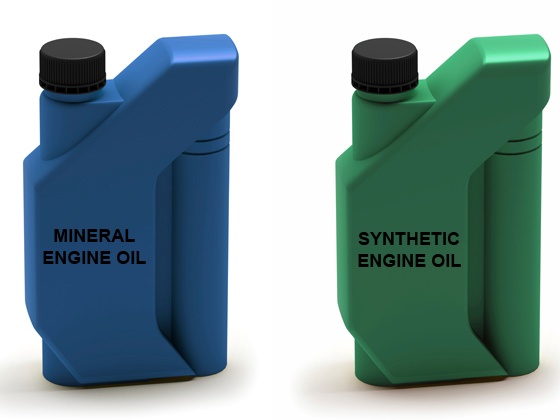
Automotive engine lubricating oils may be of mineral or synthetic origin, the first being produced from crude oil refinement and the second from chemical processes. However, there are also synthetic based mineral oils, known as semi-synthetic, which are also based on petroleum refinement, but by a differentiated process (hydro-craking) and some additional chemical additives. They have characteristics similar to synthetics, but with inferior performance.
As for formulation, there are the following types of oil:
- Mineral oil;
- Semi-synthetic oil;
- Synthetic oil
Mineral oil is composed of hydrocarbons, but they also have chemical additives, if not some drawbacks such as low temperature solidification, crude oil consistency at cylinder temperatures (150 ° C), inflammation at temperatures above 230 ° C, formation Large deposits of coal in the engine and loss of its viscosity would be reality. These additives, however, lose their stability under extreme operating conditions such as full engine load and cold starts, so the oil needs to be changed at certain times (by the manufacturer).

Synthetic oil comes from chemical processes (synthesis), they are also hydrocarbons, but their lack of additives is much smaller because their properties are already more robust. Its stability at high temperatures and pressure is far superior to mineral oil, it can work at high temperatures without losing viscosity, and ensure that during cold or cold operation the oil is more fluid, making it easier to start and warm up the engine.
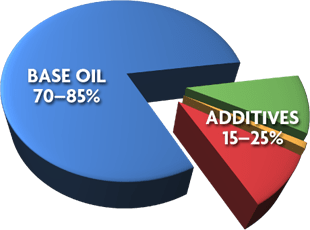
The big difference between synthetic and mineral oil is in performance during engine operation. Since mineral oil is made up of countless hydrocarbon chains of different structures and extensions, it has great difficulty in being stable at high temperature and pressure, easily losing its properties. Synthetic oil, on the other hand, is obtained by the synthesis process, which originates the polyalphaoleophins (PAO), where their structures are not so long and more uniform, guaranteeing the oil the stability of its properties at high temperatures, preventing formation of deposits of coal and good flowability at low temperatures. The only disadvantage of synthetic oil in relation to the mineral lies in the fact that its low solvency to additives, hindering its elaboration, and consequently making its development more expensive.
Classification
The oils used in car engines are classified according to two references:
- SAE;
- API.
The SAE reference, as the acronym suggests, was determined by the Society of Automotive Engineers (SAE), and designates the viscosity grade of the lubricating oil. The second reference was determined by the American Petroleum Institute (API) and determines the degree of modernity of the oil, ie its evolution in terms of additives, resistance to high temperatures, antioxidant power, freezing point among others. features.
With the evolution of the engines, more torque was extracted from the burning of the fuel used, so more heat was released from the combustion chambers. So the oil had to keep up with this evolution.
Within this evolutionary process the API classification of the oil began with the reference S and C and their classes (A, B, C, D, …). The letter S represents the spark ignition engine category, which also comes from the word service, the letter C represents the compression ignition engine category, but is also referred to as The word commerce (commerce). The API rating is as follows:
XY API
Where the letters X and Y represent the reference and class of the oil respectively. Above there is a oil API classification table for Otto and Diesel engines.

The SAE rating was developed because of both the engine working temperature and the ambient temperature at which it is running. It is identified by numbers, with the lowest rating being number 0 (very fluid) and the highest rating being number 50 (very viscous). This rating is stated on the lubricant label as follows:
SAE # W #
Where the first term “#” means the viscosity index at low temperatures, while the second term “#” represents the viscosity index at high temperatures.
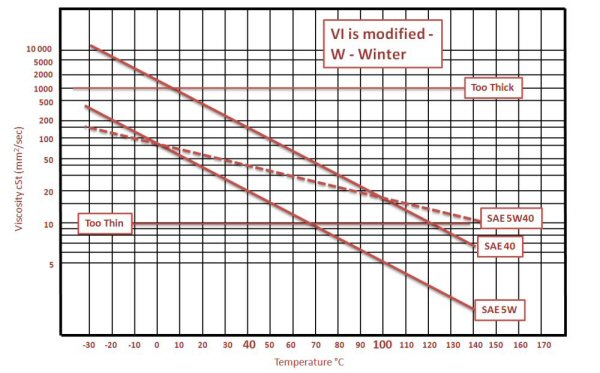
A very viscous oil will ensure good heat exchange with the cylinder and piston walls, will also keep the oil film firmer in the cylinders, but make it difficult to cold start this engine as well as its operation in the heating phase. A very fluid oil, on the other hand, considerably improves the engine’s cold-start capability and therefore its operation during the warm-up phase.
Due to the need for the oil to have this flexibility, sometimes fluidity, sometimes viscosity, the need arose to develop an oil that would meet this range between SAE 0 and SAE 50. Then came multigrain oil, a lubricant capable of having an SAE. viscous at high temperatures and a SAE fluid at low operating temperatures.

A multigrain oil differs from a common oil by its SAE viscosity index, the index consists of two numbers separated by the letter W (winter). If a lubricant has SAE 0W30 specification, it means that at a low temperature (-20 ° C) the oil has characteristics of an SAE 0, and a high temperature (100 ° C) of an SAE 30.
Characteristics
Every automotive engine lubricant must have certain characteristics to keep the engine lubricated and at optimum operating temperature. The most important properties of lubricating oil are viscosity, combustion point and freezing point.
Viscosity
It is the flow capacity of a fluid, the resistance of the displacement of molecules of a fluid in relation to other molecules. Viscosity can be measured in two ways, in Engler or Centistock grade. In Engler grade, the viscosity of the oil is compared to the viscosity of water in the same small diameter hole. The runoff time of both is related, and then the Engler degree of viscosity is reached. For example, if an oil takes about 5 times longer than water to drain, then we have an oil of 5 Engler. The Centistock unit is obtained by measuring the force required to move the lubricant by 1 cm at 1 cm / s over an area of 1 cm². It is slightly more complex than the Engler measurement, and it is necessary to use the specific oil mass, but it is the current viscosity measurement method for lubricants and greases.
Combustion point
It is the temperature at which the oil vapor is exposed to inflammation. This is a property in which the oil should be as high as possible to vaporize the oil in contact with the bottom of the step when the engine is at working temperature. A common lubricating oil has a combustion temperature between 220 – 250 ° C depending on the viscosity of the oil.
Freezing point
It is the temperature at which the oil becomes too thick at low temperatures, completely losing its viscosity. This oil property is important for cold climate regions, and this temperature should be as low as possible to make the engine start and run cold at low temperatures.
References
- BOSCH, Robert, Manual de Tecnologia Automotiva. 25.ed. Edgard Blücher LTDA, 2004. 1231p;
- CHOLLET, H. M., Curso Prático e Profissional para Mecânicos de Automóveis: O motor e seus acessórios, Lausanne, Hemus, 1996. 402.
 Automotive Papers