
XIX CENTURY
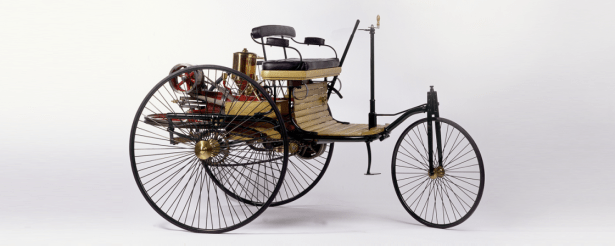
1769 – French military engineer Nicholas Joseph Cugnot, circa 1769 built a three-wheeled steam vehicle. The purpose of this was to transport war material and artillery.
1784 – Joseph Watt built a steam vehicle in 1784. However, the bolide was known to cause the first car accident to hit a wall;
1802 – Richard Trevithic developed a steam carriage, which traveled from Cornwall to London, but it was destroyed after its own creator forgot to put out the fire of his boiler;
1810 – The Peugeot family starts the activities of the eponymous company, but was still far from producing cars.
1865 – Armand Peugeot starts working for the family company, later would start producing carriages to be equipped with steam engines.
1886 – Karl Benz (1844 – 1929) and Gotlieb Daimler (1834 – 1900), working independently, were responsible for the first cars with gasoline internal combustion engines. The first produced and patented the Motorwagen, the second presented a prototype automobile based on a carriage. Karl Benz is considered the creator of the automobile.
1889 – After contact with Gotlieb Daimler and Émile Levassor, Armand Peugeot begins with the family company the production of Peugeot cars under the Peugeot Frères emblem.
1895 – Peugeot becomes the first brand to use pneumatic tires instead of rigid solid rubber, and has also pioneered sliding transmission.
1896 – Wolseley Sheep Shearing Machine Company launches its first car, the Wolseley Autocar 1, designed by Herbert Austin, which would later open its own automaker, Austin;
Peugeot breaks with Daimler and begins to manufacture its own engines. Armand Peugeot leaves the family company to open his own industry, in this case the Peugeot car factory.
1898 – Louis Renault built an ATV at his family-owned workshop in Billancourt, Paris. The small car fell in favor of some people, a great demand for the model made Louis make 71 replicas by the end of 1899.
1899 – La Jamais Contente is the first car to reach 100 km / h, in fact it surpassed this mark by reaching 106 km / h becoming the fastest car in the world in its time.
20th CENTURY

1901 – Paul Daimler and engineer Willhem Maybach designed and manufactured a car that has become standard for many other makes in Europe. It was this car that earned the name known by many today, Mercedes. Mercedes produced 35 hp, and it was such a power revolution. The name came from an Austro-Hungarian businessman who bought 36 copies of the Mercedes in exchange for his exclusive sales right in several countries. So this one decided to name the vehicle the same as his daughter, Mercedes.
1902 – Henry Martyn Leland, was an expert in military equipment and his career was based on the company created by him and Englishman Robert Fauconer. Together they designed a single cylinder engine that would be used in Oldsmobile vehicles. However, the deal did not work, and Leland, also acting as a consultant for the Henry Ford Company, placed his engine in a Ford chassis, then created his model A car. After Henry Ford left the company, a new brand was born, Cadillac . The name is a tribute to the namesake Frenchman who founded the city of Detroit in the eighteenth century. The Cadillac Model A was presented at the New York Auto Show in 1903;
1903 – Henry Ford opened his own automobile company, Ford Motor Company, in which the first car produced was the 2-cylinder Model A.
1904 – Frederick Henry Royce built his first car. At the same time, Stewart Rolls opened a distributor and machine shop in London. In common, the two guys knew Henry Edmunds, Rolls’s friend and director of a Royce company. This fellow introduced Rolls to Royce and his upbringing. A partnership was then born in which the created vehicle would be mass-produced and sold under the Rolls Royce brand;
1905 – Herbert Austin, after acquiring the necessary contribution, opens the Austin Motor Company, producing the 20hp model;
1908 – The automobile industry was in fact established. In the US, Henry Ford and his Model T hit the market, beyond the GMC group’s first steps. While in Europe several companies such as Daimler, Opel, Renault and Peugeot were being recognized as automakers.
At its launch, the Ford Model T was the most advanced car in its price range, $ 850.
1909 – Cadillac was sold to William Durant, in other words, to the General Motors (GM) group. Henry Leland remained chairman of Cadillac until 1917, when he finally broke with the GM group. Later Leland had created another brand, the Lincoln Motor Company.
The Brush Motor Car Company launches the Brush Runabout, the vehicle has been fitted with an adjustable damping system and is therefore considered the first car fitted with adjustable suspension in history.
1910 – Four years earlier, French industrialist and carmaker Alexandre Darracq set up a factory in Milan, Italy. The venture did not yield and Alexandre passed the deal to a consortium of Italian investors. Then Anonima Lombarda Fabbrica Automobili, or Alpha, is created. His first car was the 24HP sports car, with a 4,082 cc engine designed by Giuseppe Merosi.
August Horch, a German engineer and industrialist, founds Audi. Interestingly, Horch had founded another brand before, Horch in 1901. However, he eventually left it in 1909 due to his different view of the other directors of the company.
1911 – After meeting Louis Chevrolet 3 years earlier, William C. Durant along with Chevrolet fucked the Chevrolet Motor Cars Company. His first car was a 5-seat, 4.9L, 6-cylinder engine.
Ray Harroun wins the Indianapolis 500, but the curiosity about this fact was the use of a rearview mirror, installed by the pilot himself.
1912 – Charles Kettering was already working on a new ignition system. But it was in 1912 that such a system replaced the Trembler coil system. The Kettering system was based on a cam with electrical contacts in which the cam interrupted the primary circuit and resulted in the current produced to generate the spark in the spark plug. Although there is nothing documented to prove it, the Kettering system is basically the distributor-platinum system that remained in cars until the late 1990s.
1913 – Insightful as he was, Henry Ford observed various manufacturing processes such as the process of producing meat, weapons and other different products and their manufacturing process. Gradually, Model T had its production process changed. Then, after years of observation and minor improvements in Model T part manufacturing processes, the Model T became an in-line and series production vehicle, with 1913 being the year it left its assembly line every 3 hours
Louis Renault, already the majority owner of the company of the same name, produced over 10,000 cars and commercial vehicles, making Renault the largest car maker in France.
With opposite ideals, the partnership between William C. Durant and Louis Chevrolet was coming to an end. The two did not understand where the company would go, as Durant wanted to focus on vehicle designs for mass sales, while Chevrolet wanted high-performance vehicles to be Chevrolet’s course. William then bought the Louis Chevrolet part and took full control of the brand. Later William bought the GM brand, a group he belonged to until he was expelled years after meeting Louis Chevrolet.
Karl Rapp opened an airplane engine factory in Germany, the founder later left the factory and that’s when it became Bayerische Motoren Werke, or simply BMW;
Robert Bamford and Lionel Martin built their first car, a sports car with Isotta Fraschini chassis and a 1.4 liter Coventry-Simplex engine. Robert and Lionel entered him in several competitions, but the small and anonymous car stood out on the Aston Clinton mountain climb in 1914. Because of this, the anonymous car became Aston Martin;
Audi starts using electric lights and starter motors in its cars.
Peugeot launches the Type BP-1, designed by none other than Ettore Bugatti.
Peugeot wins Indianapolis 500 with Peugeot 7.6l.
1914 – James Scripps Booth founds Scripps-Booth, which produced the Model C, a very luxurious car. Its innovation was some electric controls, such as horn, pushbutton start and electric locks. The latter was the first time it was used in the history of the car, after it, Packard rescued the system in 1955.
1915 – Alfa now has the participation of businessman Nicola Romeo, still in the period of World War I.
1916 – Cadillac launches the Type 53, this was the first car to feature the standard pedal configuration, currently left-hand, center brake and right-hand throttle.
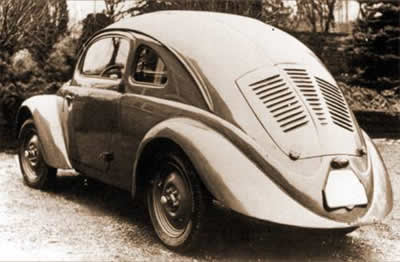
1932 – Ford designs the first European market model, the Ford Model Y.
Adolf Hitler outlines what would be the popular car proposed to Volkswagen, was born the idea of the Volkswagen Sedan, or Beetle.
Audi, Horch, DKW and Wanderer form the Auto Union conglomerate, with DKW being responsible for low-cost vehicles, Audi and Wanderer for middle-class cars and Horch for luxury models.
1934 – William Walsmsley left the Swallow Sidecar Company, which was renamed SS Cars. The following year, SS Cars launched its first sports car, the SS Jaguar 90 and soon after came the SS Jaguar 100, also a year after its predecessor. The first vehicles to bear the name of the famous British brand were born. In the post-war period, SS Cars changed again, removing the SS and permanently adopting the name Jaguar.
Citröen broke new ground with the launch of the Citröen 7CV, which had front-wheel drive and integrated chassis and bodywork. Standard configuration of current mass cars, front powertrain and one-piece structure. However, this did not prevent Citröen from avoiding bankruptcy and being bought by Michelin, where it was its largest creditor.
Peugeot launches the 402 Eclipse Décapotable, the car becomes the first electric hardtop convertible.
1936 – Toyoda puts into production its AA model, which was a model derived from American designs.
1937 – Toyoda is renamed Toyota Motor Company Limited.
After founding Suzuki Loom Works in 1909, Michio Suzuki decides to invest in a branded automobile project.
1938 – Ferdinand Porsche and Erwin Komenda deliver the first Beetle prototypes before World War II.
Buick innovates with the Y-Job, a car that has never been introduced at any auto show and so little mass produced, only one has been manufactured. However, Y-Job served to set design trends in the other vehicles of the brand, so Y-Job is considered the first concept car in the car’s history.
1939 – Packard begins offering optional air conditioning on the One-Eighty (180).
1940 – André Citröen dies, but his company’s legacy continues, as does his creative and innovative trait in the DS and XM models, which don’t let us lie;
Walter P. Chrysler dies leaving a great legacy and a great brand, today belonging to the Fiat Group.
The last pre-war Audi is manufactured, after which the company dedicated itself to making military vehicles. The name Audi was no longer seen and the Auto Union conglomerate, after the German division, stayed on the eastern side under the command of the Soviet Union. Not only Audi, but Horch and Wanderer left the market.
Enzo Ferrari leaves Alfa-Rome, but ends up, by contractual issues, having changed his team name to Auto Avio Costruzione.
1941 – In poverty, on June 6 Louis Chevrolet dies, the former pilot was buried near the legendary Indianapolis track. However, the legacy of the brand that bears its name is (and continues) very well alive;
Herbert Austin creator of the Austin Motor Company dies;
1943 – Henry Ford resumes the presidency of his company after the death of his son, Edsel Ford, from cancer at 49.
1944 – Following the liberation of Paris from German rule, Louis Renault was arrested on charges of collaboration with the Germans. These invaded the factory after dominating the capital, Paris. Treated as a traitor and criminal by the French government, Louis Renault died 3 months after being arrested. However, his legacy and hard work continues under one of France’s largest car manufacturers.
1945 – Renault becomes a state-owned company.
Edsel Ford’s son Henry Ford II became the new president of the Ford Motor Company.
Volkswagen, under US domination, and soon after, from England is now headed by Major Ivan Hirst, who reorganized the factory and put the Beetle into production. British forces ordered 20,000 cars.
1947 – Henry Ford dies at age 83;
David Brown, an industrial entrepreneur, buys Aston Martin and Lagonda, the Aston Martin now has Aston Martin chassis and Lagonda engine, giving birth to Aston Martin DB2;
The Austin Motor Company reached the 1,000,000 mark of manufactured cars;
Volkswagen starts exporting its cars.
Ferrari launches its first street car, the 125 Spider.
1948 – Started with Cadillac the fashion of luxury American fishtail rear cars designed by designers Bill Mitchell and Harley Earl.
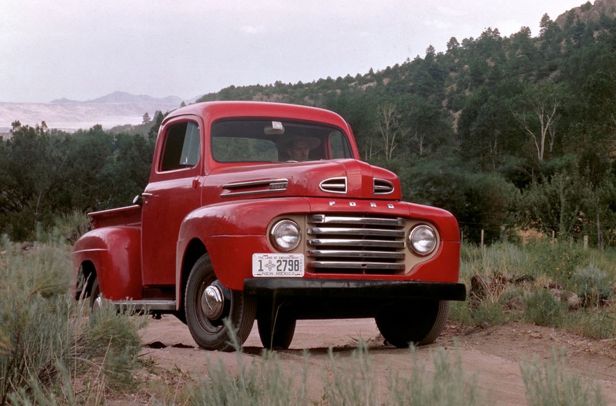
Ford launches the F-Series family of utility vehicles, one of its most lucrative projects. The F-series pickup trucks are symbols of successful projects, still in line today.
At the London Motor Show, Jaguar debuted the XK 120, a high-performance sports car, but at an inviting price compared to its competitors at the time.
Citröen launched the Citröen 2CV, one of the company’s longest running projects, sold (and well) for 42 years. It was a car of simple mechanics and cheap, but rude and robust.
1949 – Nash makes available in its vehicles the optional seat belts, the first brand to offer such safety equipment.
1950 – Chevrolet put in its cars the option of automatic gearbox for the first time.
BMW entered the luxury car segment with the unprofitable 501 model.
Alfa-Romeo launches 1900, the first single-body Alfa-Romeo body.
Nino Farina wins the Formula 1 World Championship driving an Alfa-Romeo 158, the second title would come the following year with Juan Manuel Fangio aboard the 159.
Volkswagen launches the Type 2 model, better known in Brazil as Kombi.
Porsche, under the command of Ferdinand Porsche and his son Ferry, takes its first steps as a carmaker by launching the wonderful 356.
1951 – Chrysler Motor Corporation introduces the first power steering system, as well as the company’s trademark engine, the first 330-inch (5.4-liter) Firepower V8 engine, better known as the HEMI, due to the camera’s shape. combustion is hemispheric;
Toyota launches Land Cruiser (better known in Brazil as Bandeirante), Land Cruiser sold over 6 million worldwide by the end of 2008.
Ferrari, with José Froilán González, wins their first GP in the Formula One championship, the British GP. After that Scuderia would win two titles in a row with Alberto Ascari.
Chrysler launches the first power steering system for production vehicles, the Hydraguide now equips the Imperial model.
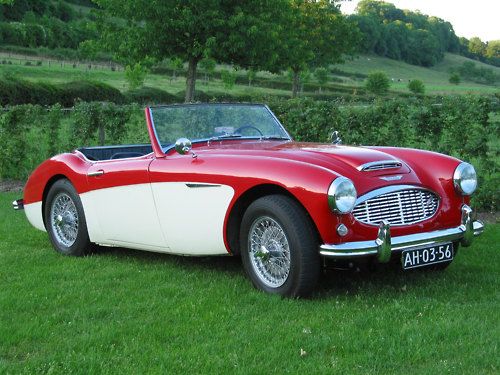
1952 Austin Motor Company reached the milestone of 2,000,000 manufactured cars;
The Nuffield Organization, which produced Morris cars, merges with Austin Motor Company to form the British Motor Corporation (BMC);
Donald Healey forms a joint venture with British Motor Corporation, and from it is born the sporty Austin-Healey 100/4, the partnership lasted 20 years.
The Goliath GP700 sports coupe would have gone unnoticed had it not been for the first car equipped with mechanical fuel injection.
1953 – Chevrolet launches the Chevrolet Corvette, a two-seater fiberglass sports car, was initially fitted with a 6-cylinder engine. However, the car was only really successful when it won the 1955 V8 engine.
1954 – Porsche launches the 356 Speedster, a convertible and lighter version of the 356, the car has become successful worldwide, but mostly in the US.
Suzuki is renamed Suzuki Motor Co., and produces its first motorcycle, Colleda.
Alfa-Romeo launches the Giulietta Sprint, with a 1,300 cm3 engine and whose main feature is aluminum and double head valve control.
Mercedes launches the W196, its race car for the Formula 1 world, known for being the first fuel-injected race car. Later that same year, the debut system on the 300 SL “Seagull Wings” became the first fuel-injected sports car, however mechanical.
1955 – Chevrolet introduced in one of its models the V8 engine that is now known as “Small-Block”, initially with 265 in3 and 180 hp.
In racing, a tragedy, Pierre Levegh after engaging in a collision, pieces of the vehicle, a Mercedes-Benz 300SLR were hurled at the crowd during the 24 Hours of Le Mans. On the other hand, that same year, Juan Manuel Fangio brought the same mark to the Formula One world title with the W154;
BMW bought the rights to the compact Isetta, put in the BMW engine and re-launched it;
Citröen launches the groundbreaking DS, which while sharing opinions, was technically very advanced when deploying the hydropneumatic suspension system and disc brakes on the half-trees. The DS had a front longitudinal engine with hemispheric combustion chambers of about 110hp and front-wheel drive;
Aston Martin buys coachbuilder Tickford, the acquisition represents the beginning of even more luxurious Aston Martin models;
Suzuki launches its first car, the Suzulight SF, a K (kei jidosha regulation compact vehicle designation) utility car that had a 2-cylinder, 366 cc engine that ran on a 2-stroke otto cycle.
Packard launches another generation of One-Eighty, the Packard Custom Super Eight One-Eighty, this time equipped with an innovative power window system. Such a car became the first to have electric windows in the history of the automobile.
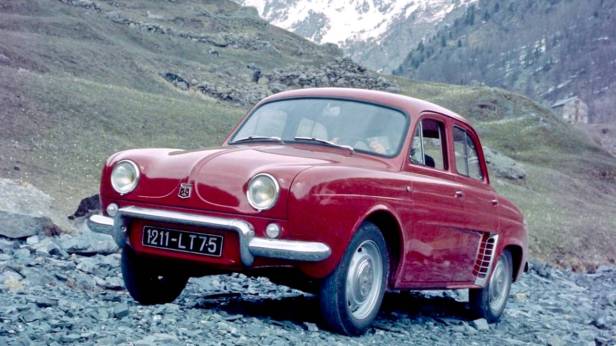
1956 – Renault launched one of its most successful cars, the Renault Dauphine, with 845cm3 engine. The vehicle has become so popular that it has gained a significant mark in a market that is totally averse to this type of vehicle. 200,000 Dauphines have been sold in the US alone. Dauphine was also sold under license in other countries, Brazil was one of these, in which the charismatic renaul was sold under the name of Renault Gordini;
The Romi Isetta became the first car to be manufactured in Brazil.
1957 – Toyota enters the US market with the Toyota Crown.
1958 – Daimler-Benz acquires much of Auto-Union and DKW.
Peugeot launches, designed by Pininfarina, the 504, which is had with one of the most peculiar and versatile cars of the brand. Some say, too, that he was the desert explorer, rather than Land Rover and Jeep.
1959 – British Motor Corporation launches its most successful car, the Mini, designed by Alec Issigonis, and manufactured by both Morris and Austin. The Mini was a design and technical revolution, equipped with a transverse front engine and compact gearbox (read more), the Mini had front-wheel drive, was economical and cheap. Its powertrain and chassis configuration has proved to be the future and is still used today. The car was also famous for being the vehicle of the character Mr. Bean;
Suzuki replaces Suzulight SF with the more modern TL.
Volvo launches the PV544, the highlight of this car is being fitted as standard with three-point seat belts. The item was designed by Nils Bohlin.
1960 – Chevrolet launched the controversial Chevrolet Corvair. The vehicle was a rear engine coupe and rear axle suspension. However, the vehicle collected lawsuits that constituted its safety due to the directional instability caused by its powertrain configuration. In addition, many consumers claimed that Chevrolet had put the vehicle up for sale knowing the defects. Lawyers, engineers and enthusiasts are divided over the accusations suffered by the company, but the fact is that Corvair was one of the motivations for improving vehicle safety.

1961 – Jaguar launched the E-Type model, a sports vehicle based on the winning C and D-Type race cars. The E-Type is still considered one of the most beautiful cars in the world, considered as a reference of automotive beauty.
1962 – GM was developing a high speed sled for vehicle crash testing. This was an important step in the study of the impacts on cars, because with the sleigh guiding cars toward the obstacle rather than a test driver, it was possible to perform more accurate and less risky simulations. During this period the analysis began to shift from vehicle damage to damage that the driver could have.
Porsche gets its first F1 win as an engine builder.
Suzuki launches the Fronte, ride version of the TL.
1963 – Citröen bought the Panhard brand but stopped producing its cars in 1968.
Negotiations begin between Ford and Ferrari defining the purchase of the Italian brand by the American giant. However, the negotiations did not succeed and from this scenario arose an elbow pain called the Ford GT40;
Chrylser Motor Corporation launches the first ever Pony Car, the Plymouth Barracuda.
Porsche launches the 911, which became the brand’s icon, had the mission to replace the successful 356.
1964 – The first Ford GT40, serial number GT101, is unveiled in England;
Aston Martin launches the Aston Martin DB5, which would be the evolution of DB4, a sporty and luxury coupe. This car gained fame when it was chosen to be Secret Agent James Bond’s car, the first appearance of the DB5 was in 007 Against Goldfinger;
Buggy fashion begins, Californian Bruce Meyers wins the Baja 1000 competition in Mexico with his own-designed Manx buggy. The car was basically a Beetle chassis with a fiberglass body on top. The little buggy broke records and won several rallies. Street versions sold 6,000 units from 1964 until 1971.
1965 – Volkswagen buys Daimler-Benz Auto-Union, which includes the Audi, Horch, DKW and Wanderer brands.
Peugeot launches the 204, the brand’s first front-wheel drive vehicle and also the start of the powertrain standard adopted by the brand.
1966 – Shaken by financial problems since the early 1960s, Jaguar merged with BMC to form British Motor Holdings.
With the Ford GT40, Ford finally wins the Le Mans 24 Hours. The winning car was driven by Bruce Mclaren and Chris Amon, while second place, another GT40, was driven by Ken Miles and Denis Hulme.
Alfa-Romeo launches the most iconic of its cars, the Alfa-Romeo Spider, the small roadster had a long life and remained on the market until 1993.
Toyota launches the Corolla and becomes Japan’s best-selling car, by 2009 the Toyota Corolla had 25 million units sold worldwide.
Jensen launches Jensen FF, a variation of the Interceptor, but with all-wheel drive system. Thus, the FF became the first all-wheel drive passenger car.
1967 – Citröen begins a partnership with NSU, a vehicle brand that featured the use of rotary engines (Wankel). The focus of the partnership was the development of this type of engine.
With Jim Clark’s victory at the Formula Dutch Grand Prix in 1967, Ford successfully started its engine project with Cosworth in F1. The 3,000 cm3 Cosworth DFV V8 engine won 10 of 16 championships between 1967 and 1983, helping riders like Jackie Sterwart and Emerson Fittipaldi win their titles.
Toyota buys the Japanese Daihatsu.
1968 – The new US Vehicle Safety Law came into force in the United States, which contained the requirements to be followed regarding pre- and post-crash safety.
British Motor Company merged with the Leyland group to finally form the British Leyland, in which Jaguar became a part. However, a few years later, the group was satisfied and the quality of the cars fell.
Citröen undertook the unsuccessful purchase of the Italian Maserati, and had to be helped by the French government in the size of the losses from the failed projects.
Volkswagen launches the Type 3 (1600 TL / E) with engine equipped with Bosch electronic injection system, was the first production car to have such a system.
1969 – Volkswagen buys NSU, merges Audi and NSU to form Audi NSU Auto Union AG. Volkswagen launches NSU brand sedan, but renamed Volkswagen K70.
Fiat acquires 50% stake in Ferrari shares.
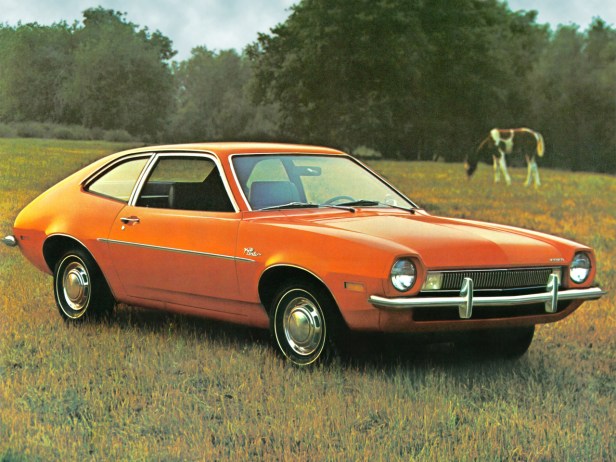
1970 – Ford launches the Ford Pinto subcompact, and it becomes one of the most popular of the 1970s, until mysterious cases of its model ignited after rear-end collisions surfaced. Ford Pinto’s Recall was a negative in the brand’s history, as it was discovered through a memorandum that Ford already knew about the problem and cost of repairing every vehicle on the assembly line, and that it compared to the cost of identifying people. who suffered vehicle accidents realizing that they were smaller than repairing each vehicle manufactured. The Ford Pinto went out of line in 1980.
Toyota launches the Celica coupe, years later the sport became recognized for its performance at the WRC, winning the 1993 and 1994 titles.
Porsche gets their first win in the 24 Hours of Le Mans with the fast and dangerous 917 K, driven by Hans Herrman and Richard Attwood.
Suzuki buys Hope Motor and launches its HopeStar vehicle, renamed Suzuki LJ10. It was the first in a line compact 4×4 cars, configuration that would turn its know-how.
1971 – After major financial difficulties, Rolls Royce became government property. However, the automobile division was separated from the original company, which also manufactured (and still manufactures) aircraft engines. Then a new company was born, Rolls Royce Motors;
Alfa-Romeo launches Alfasud, a successful compact from the Italian brand. It was made in Naples and even had its own single brand competition.
Lamborghini presents, as a concept, the Lamborghini Countach.
1972 – David Brown sells Aston Martin to Company Developments.
Toyota becomes the third largest automaker in the world.
1973 – Porsche overwhelmingly wins the American Can-Am championship with the Porsche 917/30 KL guided by Mark Donohue. This Porsche is regarded as the racing car’s Magnu-opus, as it produced around 1100 bHp, which until then remains the largest ever produced by a racing car.
1974 – Peugeot bought 38.2% of Citröen shares, the purchase meant the end of the brand’s autonomy and inventiveness in its decisions and cars. Two years later Peugeot increased its dominance over Citröen, raising its stake in the shares to 90%.
Volkswagen launches the Scirocco and Golf, was the beginning of the end of the Beetle, already obsolete before rivals.
Lamborghini launches the Countach LP400, an innovative design supercar signed by Bertone studio. The car was a 3,929 cm3 V12 engine coupe positioned longitudinally between the rear axle and passenger compartment. The Countach was the first high performance street car to use with a wedge design.
1975 – Volkswagen launches the compact Polo and the GTI version of the already launched Golf. The brand already had enough products to replace the Beetle.
Porsche launches the flagship version of the 911, the 911 Turbo.
1978 Lee Iacocca, hitherto president of Ford, is hired by the Chrysler Motor Corporation with the tough mission of getting the company out of financial trouble.
Production of the Volkswagen Type 1 (Volkswagen Beetle) is closed in Germany. The car continued to be manufactured in Mexico and Brazil.
1979 – BMW begins production, however limited, of its first supercar, the M1.
Ferrari wins the world title with Jody Schekter, would be the last title until the Michael Schumacher era.
1980 – A British engineering company called Vickers bought Rolls Royce Motors.
End of production of Volkswagen Type 1 Cabriolet in Germany.
Audi launches the Audi Quattro, a turbocharged all-wheel drive 5-cylinder coupe. The car was victorious at the Rally World from 1982 to 1984, kicking off quattro all-wheel drive technology. This car and quattro technology accounted for many wins at the Trans Am and Pikes Peak International Hill Clim.

1981 – BMW enters Formula One World Championship by supplying engines for Brabham team. Later, in 1983, this engine helped Nelson Piquet achieve the world driver title;
John Zachary Delorean begins production of the namesake sportsman, DeLorean. The car had a backbone chassis and a rear-facing Renault V6 engine. However, the project did not go as it should, the car only gained fame when it debuted in the movie Back to the future (1985).
Suzuki launches its new generation of 4×4 vehicles, the SJ series. The vehicles were exported to the US and Australia, where they were sold under the Chevrolet and Holden brands. They were also manufactured under license in Spain and India.
General Motor buys 5.2% stake in Suzuki Motor Co. It was from this moment that the Suzukis began selling in the US under the Chevrolet brand.
McLaren was placing the MP4 / 1 on the Formula 1 grid, for the first time a car with all-carbon monocoque. The car was designed by engineer John Barnard.
1982 – The British Leyland group changed its name and was renamed Austin Rover, with Austin being the flagship brand, Rover the luxury division and sporting versions of both carried the MG brand.
Toyota launches the MR2, a 2.0l mid-engine sports car with turbo and NA versions.
1983 – Peugeot launches the compact hatch 205, but the car became known even after entering the rally world, in this event the 205 had turbo engine and four-wheel drive system. The first victory came 1984 and the world titles in 1985 and 1986.
Porsche returns Formula One as engine supplier to McLaren, TAG-Porsche helped Alain Prost and Niki Lauda compete for the world title.
1984 – Porsche, along with McLaren, help Niki Lauda win the Formula 1 World Championship by 0.5 points over Alain Prost.
1985 – Audi wins the Pikes Peak International Hill Climb competition with the Audi Sport Quattro S1 at the hands of driver Michèle Mouton.
1986 – Shaken by financial problems, Alfa-Romeo is bought by Fiat.
Porsche launches the modern 959, a vehicle very similar to the 911, also with boxer engine, but two turbos and four-wheel drive system. Only 200 units were sold until the model went out of line 1989.
Buick launches the Riviera, which would be another 80’s American car, not for its onboard computer. It had the Touchscreen feature, where the screen commands were accessed by touch. The computer controlled basic functions such as air conditioning, clock, door lock and information about vehicle operation.
1987 – Ford buys British luxury car brand Aston Martin;
Chrysler Motor Corporation buys American brand American Motors Corporation (AMC), the deal also gave CMC Jeep brand;
Ferrari, in celebration of the brand’s 40th anniversary, launches the F40. The bolide is considered special for enthusiasts because it is the last car of the commendatore era, as it is rustic as a race car and approved for riding on the streets. The Ferrari F40 also becomes the fastest production car in the world, with 323 km / h top speed.
Peugeot wins for the first time the Paris-Dakar rally, would be the first of four consecutive wins.
1988 – British Leyland is privatized under British Aerospace, becoming the Rover Group. Two years later, vehicles sold under the Austin brand became Rover or MG;
Suzuki launches its best known utility, the Vitara (Shield in Japan), the vehicle was a success due to its good off-road capabilities and compact dimensions.
Enzo Ferrari dies leaving Ferrari and a legacy.
1989 Ford buys British brand Jaguar for £ 1.6 billion.
Mazda launches the MX-5 (Miata and Eunos were their names in some countries.), The car was a two-seater sports car and clearly focused on driving pleasure, has a backbone chassis and a 1,600 and later 1,800 DOHC 4-cylinder engine cm3. The Mazda Miata is an example of successful and long-lived sports, remained original until 1997, when it was restored. Also, it was a car that sold several countries.
Toyota starts a new venture with its luxury division Lexus in the USA.
1990 – Volkswagen buys the Spanish brand Seat.
Audi wins the DTM title of the year with the Audi V8.
Mazda launches the fourth generation of the Eunos Cosmo, which was on the market until 1996, but its contribution to history is that it was the first car equipped with a GPS navigation system.
1991 – Chrysler Motor Corporation launches its first super sports car, the Dodge Viper, with a V10 engine.
Suzuki launches the Cappuccino roadster, a sports car that complied with Kei Jidosha regulation, had a 657 cm3 turbo engine and rear-wheel drive. The nice car remained on the market until 1997.
1992 – The Jaguar XJ220 became the fastest production car in the world by reaching the mark of 340.8 Km / h (213 Miles / h);
1993 – Aston Martin launches the DB7 Gran Turismo, the car had 5,000 units produced by the year 2001;
1994 – The compact urban Smart arrived at dealerships. Although under its own name, the brand belongs to the Mercedes-Benz group.
Audi launches the large A8 sedan, its main attribute was to be made entirely of aluminum.
1996 – Renault, after a long period of financial hardship (since the 1980s), was privatized.
Audi, with the A4, helps Frank Biela win the British Touring Car Champioship – BTCC.
Audi launches the A3 hatch.
Porsche launches the Boxter roadster, which differed from the traditional cars of the brand by having a central engine, instead of rear like the 911.
Ferrari sign for Formula 1 team Michael Schumacher and Ross Brawn, who together with Ferrari would start a process of returning the team to victory.

1997 – Mercedes-Benz sold the compact A-Class with the intent of being the entry-level and most affordable Mercedes. The project was not so successful, but it was even known for failing the moose test by a specialized magazine. The A-Class flipped over with three journalists on board.
Toyota innovates launched the Prius in the US, the first mass-produced hybrid car.
1998 – Cadillac launched its first SUV, the Cadillac Escalade. The vehicle was a success and represented the revival of the brand, which was years behind the other luxury car brands;
Volkswagen bought the Rolls Royce and Bentley brands from the Vickers group. However, the purchase involved everything but the Rolls Royce name, still belonging to the original brand, which operates in the aerospace industry. BMW got into the game by buying the Rolls Royce name for £ 40 million, and Volkswagen was forced to give up Rolls Royce Motors, but with Bentley. Today, Rolls Royce continues with BMW, as does Bentley continue with Volkswagen;
The Daimler-Benz group buys the Chrysler Motor Corporation, the group was then called Daimler-Chrysler.
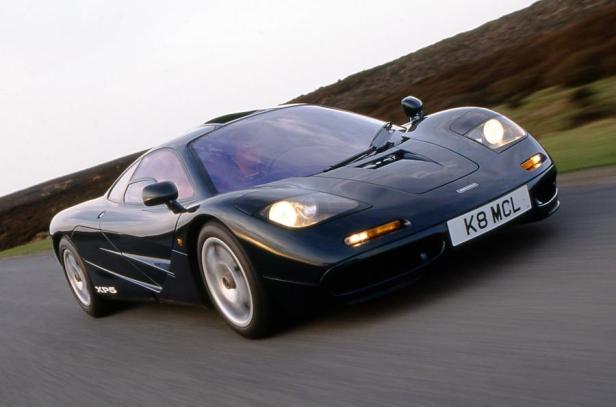
The Mclaren F1, powered by a powerful BMW 6.1L V12 engine, became the fastest production car in the world by breaking the top speed record, reaching 386.4 Km / h (240.1 Miles / h). Although this record has already been surpassed, the Mclaren F1 remains the fastest aspirated engine production car in the world.
Alfa-Romeo launches the medium sedan 156, the car has become the car of the European year and is still remembered for its good mechanics.
Volkswagen launches the compact Lupo, which would later be powered by a 1.2l diesel engine.
Volkswagen launches the commented New Beetle, the rereading of the old Beetle sought only design memories, because it had front 2.0 engine, front-wheel drive and the main, was a niche product, completely the opposite of Type 1.
Audi launches the stylish Audi TT, under the name of a bauhaus style.
Audi buys Lamborghini.
1999 – Renault formed an alliance with the Japanese Nissan and became the majority owner of the Romanian brand Dacia.
Ford bought F1 Stewart’s team from triple world champion Jackie Stewart. The team was renamed Jaguar, but Ford’s F1 adventure was unsuccessful.
XXI CENTURY
2000 – Ford is recalled again, this time due to problems with the Firestone tires that fitted the Ford Explorer models.
Audi wins the Le Mans 24 Hours for the first time in the top class with the Audi R8.
Suzuki in partnership with GM produces the Wagon R in Hungary.
Ferrari, along with Michael Schumacher, win their first Formula One title since 1979. The composite team led by Ross Brawn, Jean Todt and Michael Schumacher won together until 2004.
2001 – Chevrolet took over ownership of the Korean Daewoo brand, which allowed the American giant to place its brand name on inexpensive Daewoo compact vehicles that were exported to several countries.
BMW, after buying the Rover group, reinvents the Mini brand, putting on the market new models of the compact Mini-Morris, but being a premium vehicle;
Aston Martin launches the V12 Vanquish, which becomes the James Bond car in the movie “007 A New Day to Die”;
2002 – Volkswagen launches its luxury sedan, the Phaenton, which could be powered by either a W12 petrol engine or a V10 diesel engine.
Toyota begins its first season in the Formula 1 World.
Porsche innovates by launching its first sport utility vehicle, the Cayenne. The SUV later became the best selling car of the brand.
Ferrari launches its newest supercar, the Enzo Ferrari. The car was equipped with a traditional V12 engine capable of driving the vehicle at 360 km / h.
2003 – Fusca production is finally closed in Mexico. The compact Volkswagen then left the market to enter history. Meanwhile, the DSG dual clutch gearbox enters the market.
The VW Sedan was saying goodbye to the market to make history with 21 million units manufactured.
2006 – BMW buys the Swiss team Sauber by establishing its factory team at the Formula 1 World Cup. The German-brand team competed in the 2006-2009 event.
Audi wins the Le Mans 24 Hours again, though, being the first diesel-powered car victory in the history of the competition. The Audi R10 TDI had a 5,499 cm3 V12 engine and two turbochargers.
2007 – Cerberus Capital Management buys Chrysler from Daimler-Chrysler group, Chrysler then became a venture capital firm;
Ford sells Aston Martin to a Kuwaiti consortium, the venture was led by David Richard, a founder of the Prodrive team that prepares cars for rallying and other competitions.
2008 – On the verge of bankruptcy, Chevrolet suffered a US government intervention that took control of the company.
Ford sells Jaguar and Land Rover to Indian group Tata for £ 1.15 billion. These currently remain under the command of the Tata group.
2009 – Fiat group acquires Chrysler;
Aston Martin creates a Joint Venture with Toyota, and from it the Cygnet urban compact is launched;
Peugeot wins the Le Mans 24 Hours with the 908 HDI FAP prototype, the victory representing the end of Audi’s hegemony in the competition.
Toyota is recalled by 8 million cars due to problems with the electronic accelerator pedal. The cost of the recall is estimated to be around $ 1.93 billion.
Porsche launches the Panamera, a four-door coupe body car that is clearly a luxury vehicle.
Volkswagen acquires 20% stake in Suzuki Motor Co.
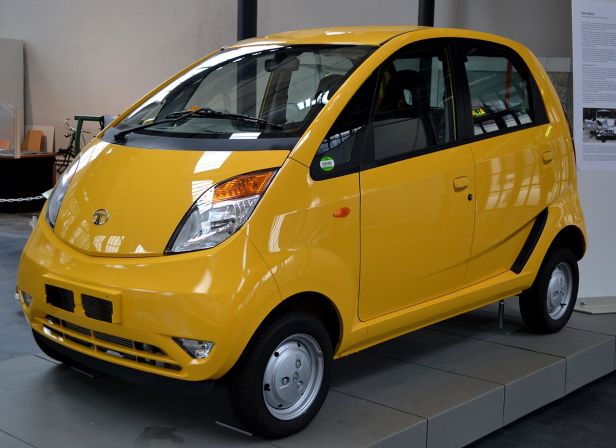
The Indian conglomerate Tata launches the popular compact Tata Nano, which came with the harsh mission of driving the Indian people away from motorcycles. The Nano was the cheapest car in the world, costing only 100,000 rupees (about $ 1,500).
2010 – Aston Martin launches the Raptide model, which impressed as one of the few 4-door models;
2011 – Porsche and Volkswagen merge, years after Porsche’s onslaught to buy the compatriot brand.
References
- GILLESPIE, Thomas D, Fundamentals of Vehicle Dynamics, Warrendale, Society of Automotive Engineers, 1992. 470p;
- The car book, London, England, Dorling Kidersley Limited, 2011.
 Automotive Papers